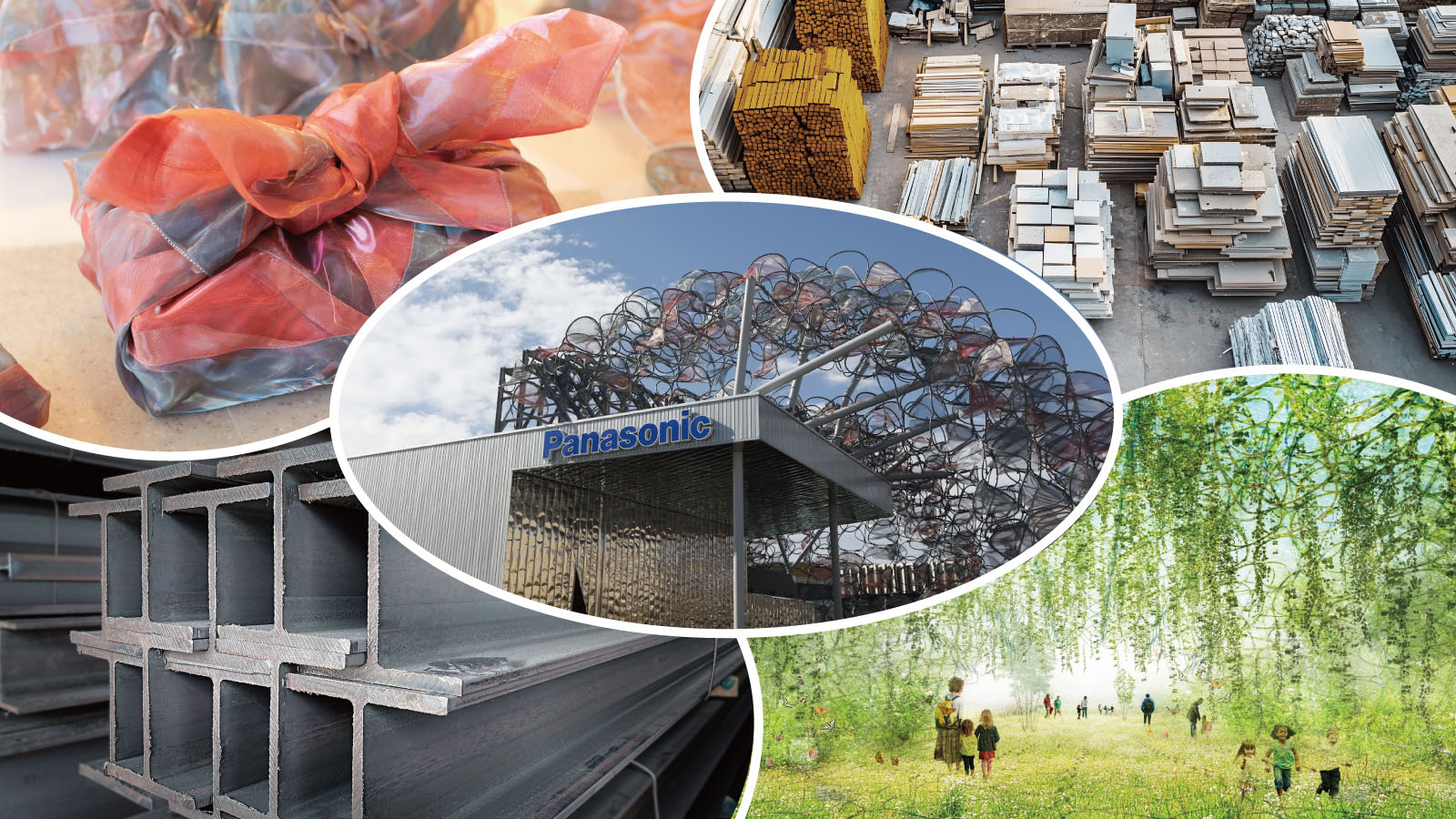
Panasonic Group’s “The Land of NOMO” Pavilion at Osaka Expo 2025 was a great success. It brought in 470,000 visitors—far surpassing original projections. When the Expo ended, Panasonic began the next ambitious phase of the project. Since the pavilion was designed as a model for reuse and recycling, the initiatives for dismantling the pavilion and repurposing materials had to start right away.
From recycling steel and copper to repurposing facade frames*1 and paving blocks, nearly every component of the pavilion was designed for reuse. Even the symbolic organdy fabric*2 fluttering across its exterior and the staff uniforms will be reused or recycled. As a result, over 99% of the materials*3 used for the pavilion—excluding exhibits—will circulate back into society.
*1. The main steel frames that made up the building’s exterior
*2. A thin, lightweight, membrane-like fabric that is given luster and functionality through metal sputtering
*3. The Panasonic Group Pavilion is expected to achieve a reuse and recycling rate of over 99%, excluding exhibits, calculated by weight of the various building materials (concrete, steel, waste plastic, exterior walls, mixed waste, gypsum board, exterior structures, etc.)
To achieve this high reuse and recycling rate, Panasonic collaborated with many partner companies throughout the entire process—from planning, design, and construction to post-event reuse and recycling. This challenge embodies Panasonic’s commitment to a circular society. This article details some of the approaches used.