



Aug 31, 2026
- Products & Solutions
- Stories
- Technology
- AI & Robotics
- R&D
- Devices Area
- Solutions Area
- Business Solutions
- Operating Company
Update: November 20, 2025 – We have made minor adjustments to the wording on our article to improve clarity and accuracy.
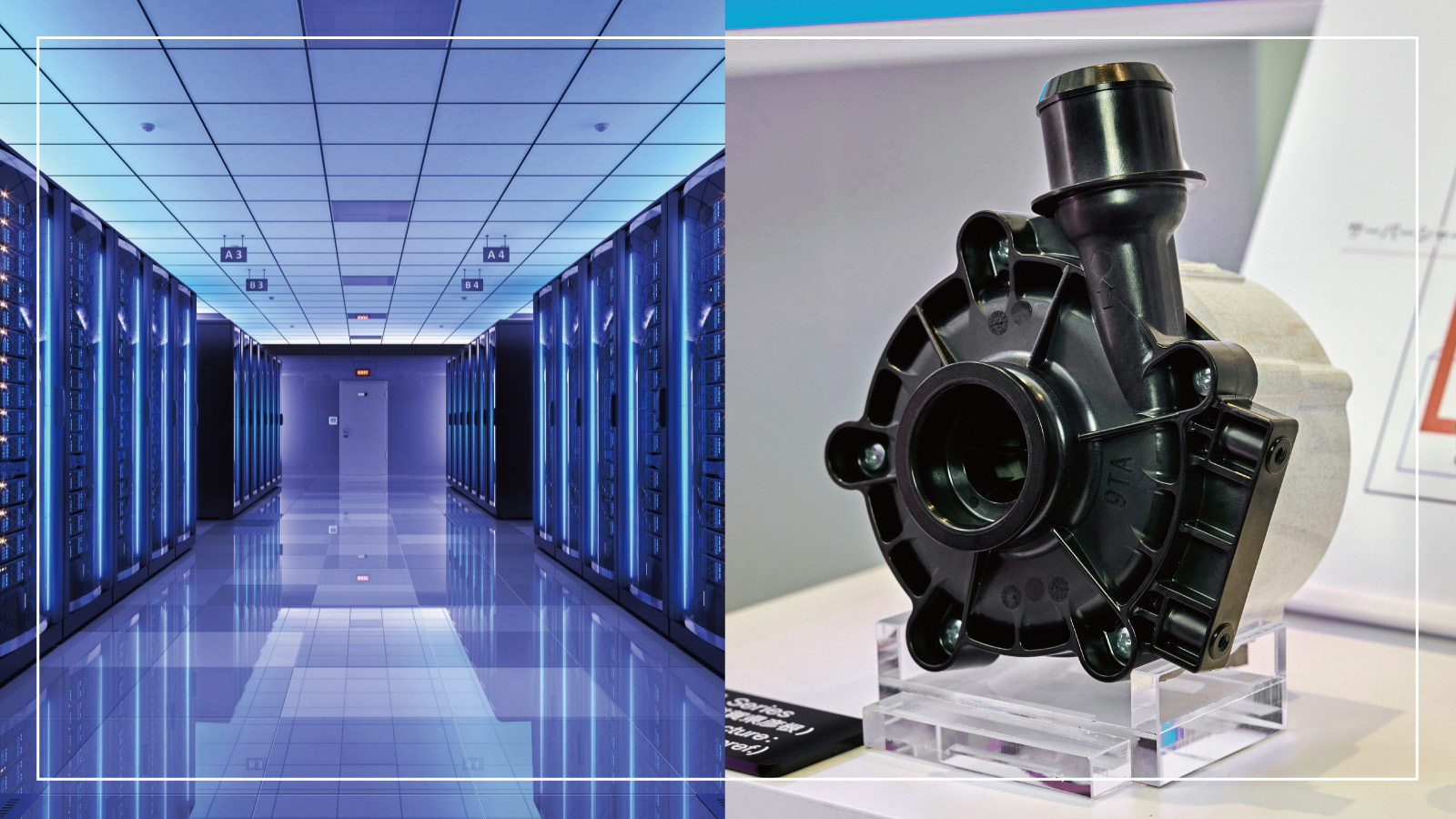
The accelerated digitalization and growing utilization of IoT and AI technologies in recent years has made data centers an essential part of our lives. As the AI infrastructure and data center industries adopt more advanced chips with higher speed and increased data processing capacity, how to manage the heat generated by these systems has become an urgent challenge. Innovation in cooling technology is critical to ensure stable operation and sustainability in an evolving AI-assisted society.
Panasonic celebrated its 70th anniversary in pump business in 2025. Leveraging expertise gained from its pump business, Panasonic developed a new liquid cooling pump specifically designed for cooling servers in data centers. The pumps can be configured into a Coolant Distribution Unit (CDU), a core component for server cooling, to circulate liquid efficiently.
This article introduces Panasonic’s ongoing efforts to realize a sustainable digital society through developing compact, high-efficiency, and long-life pumps that help make operations for AI infrastructure more reliable and energy efficient.
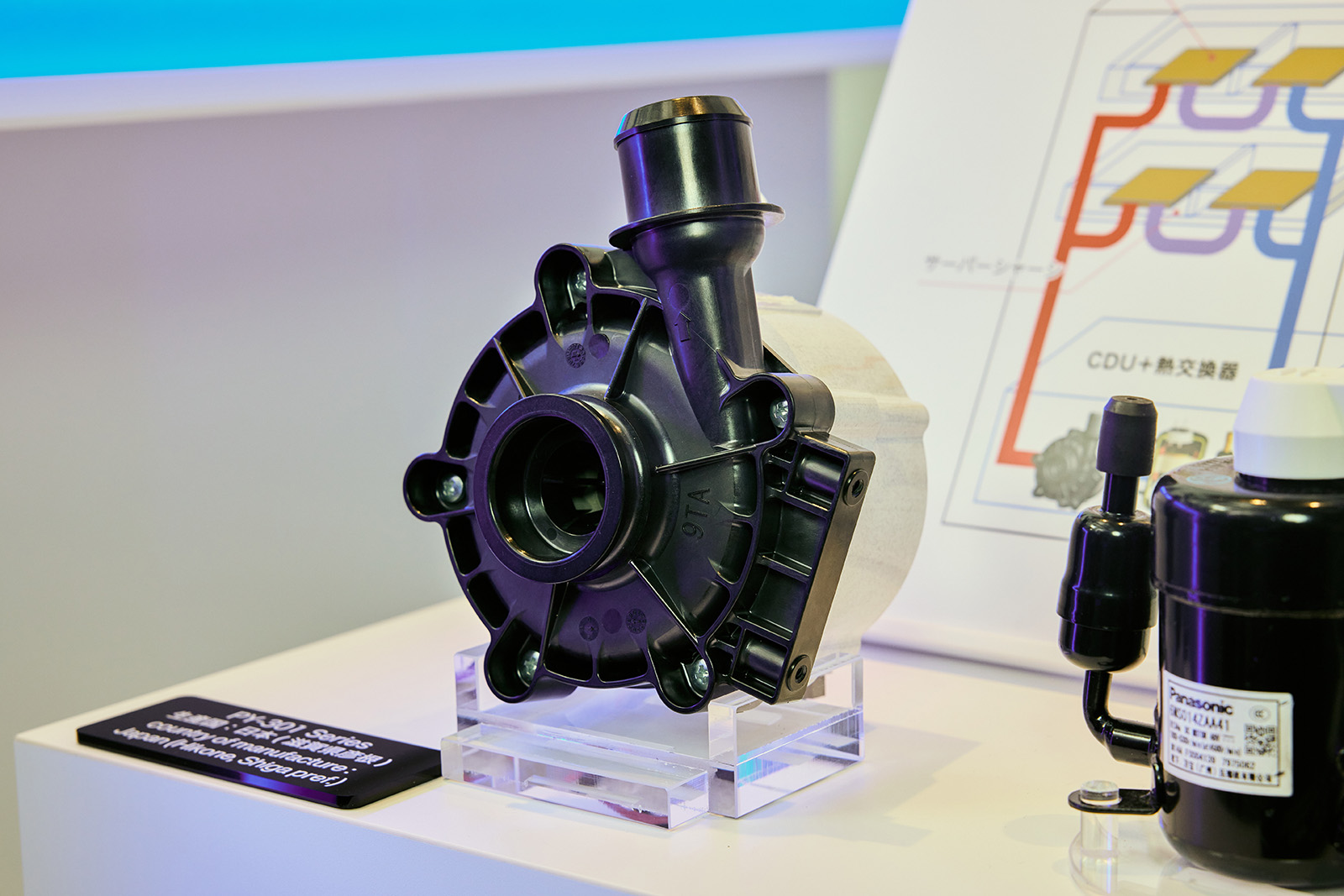

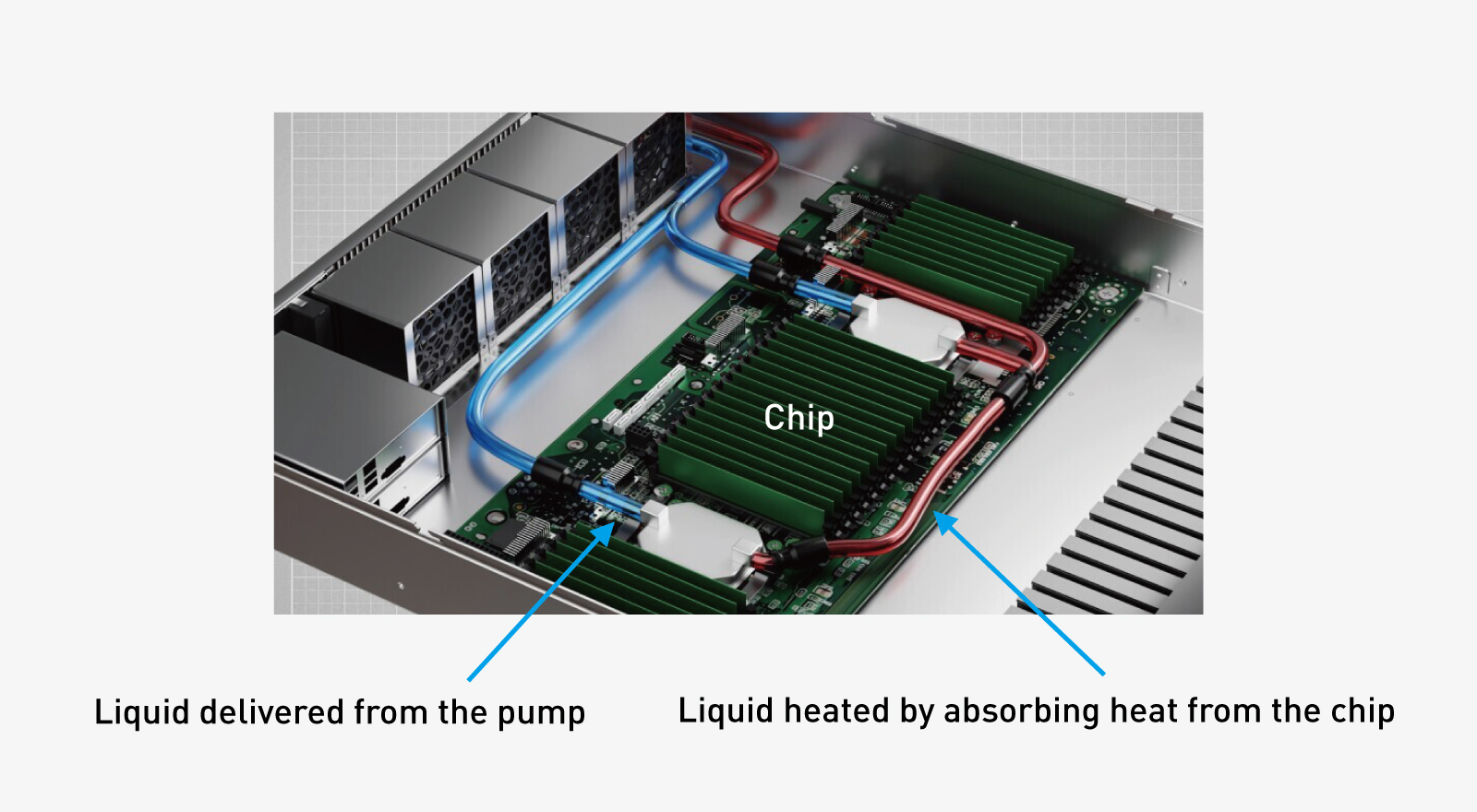
To deal with the excess heat that GPUs and AI accelerators generate inside servers, there is a growing need for more effective cooling solutions. Liquid cooling systems are gaining popularity, because liquids conduct heat better than air, which has traditionally been used in systems like fans and air conditioners.
These liquid cooling systems rely on liquid cooling pumps, which send liquid through servers to absorb heat. The liquid is then cooled down in the CDUs outside the servers before being recirculated. The pumps housed inside the CDUs efficiently dissipate heat and ensure continuous circulation. Demand for these pumps has been greatly expanding, as they enhance the overall reliability and energy efficiency of server systems.
Panasonic was ready to meet this demand. The company has a successful history with 70 years in the pump business, starting in 1955 with home pumps (well pumps) for household water. Since the 1980s, Panasonic’s technology has been widely used for built-in pumps in residential water heating, space heating, and bathroom systems. Its pump technology subsequently expanded into applications such as heat exchangers and waste heat recovery systems. Cumulative pump sales surpassed 53 million units in 2024, and Panasonic’s pump business holds a dominant share in Japan’s water heater market. This strong position has been built on the early adoption of DC (direct current) motors that improve energy efficiency and on compact, lightweight designs—features that are highly valued by customers.
Leveraging this technology and its successful track record, Panasonic entered a new market in 2021. “In addition to our core heating industry market, we entered the data center market. This was a major challenge for us,” says Koji Nakamura, Director of the Device Products Business Unit, Beauty & Personal Care Division.
The CDU comes in two types: the In-Rack type, which provides cooling for an individual server rack, and the In-Row type, which cools multiple servers. Panasonic’s liquid cooling pumps are compact enough to be installed in In-Rack CDUs. In this configuration, three pump units can be housed within the limited 4U (178 mm) internal space of an In-Rack CDU. Two pumps operate continuously, while a third pump provides redundancy to prevent cooling failures. This high level of redundancy is essential for data protection in case of emergency situations.

Panasonic’s small pumps allow for compact CDU design while ensuring redundancy. Their development involved significant technical challenges. “Integrating the pumps into the CDU structure was a new challenge for Panasonic, requiring development of new pump components,” explains Yusuke Iwai, who is in charge of design and engineering.
Since the size of the server is limited, it was impossible to increase the size of the pumps. At the same time, more liquid flow was needed to increase cooling capacity. To meet these contradictory requirements, Panasonic has developed a new cooling pump for servers that features high performance, high efficiency, and a long service life while maintaining its compact size.
Utilizing magnetic field analysis, fluid dynamics analysis, and flow analysis, Panasonic’s team developed the pump components through repeated simulations for improved motor efficiency and smoother liquid flow.
The team succeeded in reducing the impact of heat generation through proprietary encapsulation technology using integrated molding, improving the energy efficiency of the overall system and simplifying the design of the cooling system.
The result was a 75% increase in the flow rate (from 40 to 70 liters per minute) while maintaining the same size.

Additionally, an optimized fluid design for the self-lubricating, submerged sliding bearing structure reduced load on the shaft. With wear minimized, the pump can operate for an industry-leading lifespan.
They used built-in structures to integrate the motor into the pump section. This reduced the size of the pump while improving efficiency and providing greater layout flexibility for CDU configurations.
Specification changes can occur even after mass production systems are set up, so pumps in the CDU need to be customizable. To respond swiftly to changing customer needs, close cooperation with the local sales company who are delivering the products is essential.
Panasonic began market development for the new pumps in 2021 in Taiwan, a hub for the AI and data center industries, and established a system to work closely not only with the local sales company but also with other Panasonic group companies. “This accelerates new product development in ways that would have been unthinkable just two or three years ago,” explains Yoshiyuki Yamazaki, who is in charge of planning and marketing.
Yamazaki and other Japanese development members frequently visit the local sales company in Taiwan for face-to-face meetings. With this collaboration, Panasonic’s pump business in Taiwan has grown steadily. “In fact, performance of Panasonic’s pumps as well as our sales approach are highly valued by the AI server ODMs and data center companies in Taiwan,” says Jasper Lee, Sales Manager at Panasonic Industrial Device Sales Taiwan Co., Ltd. “We are always inspired by the Japanese team who frequently visit Taiwan. We look forward to continuing our collaboration to pioneer the next generation of markets.”

Panasonic has been manufacturing pumps using an integrated production system at the Hikone Plant in Shiga Prefecture, Japan. By manufacturing key mechanical components such as ceramic parts and impellers in-house, Panasonic ensures the high precision and quality of its products. The entire production process—from integrated molding that combines coil winding and motor circuitry to final pump assembly—is also done in-house.
Pump Development, Manufacturing, and Marketing Departments are all located within this plant, and five design divisions—Market Needs Design, Product/Quality Design, Equipment/Mold Design, Method Design, and Process/Control Design—can make progress concurrently in one place. This explains how Panasonic is able to swiftly address customer needs and respond to constantly changing requirements and the challenges. The setup also facilitates advancement through real-time decision-making, which is supported by sharing information, problem-solving measures, and status among departments on a daily basis.

The Hikone Plant is planning to add a new wing. It is scheduled to begin operations by the end of March 2028. This initiative will enable Panasonic to meet the growing global demand for cooling pumps for data centers.

Rendering of a new wing at the Hikone Plant, currently under construction and scheduled to begin operations by March 2028.
Through business expansion, Panasonic aims to contribute to the evolution of an AI-driven society.
“Advancements in cooling technology directly impact not only the progress of an AI-assisted society but also the future of our planet’s environment,” says Koji Nakamura. “By continuously refining our core strengths—product capabilities and development responsiveness—and by maximizing the value of solutions that we provide for our customers, we will help realize a sustainable digital future.”
“Our immediate goal is to achieve cumulative shipments of 100 million units by 2035. Guided by our pump business slogan, ‘Make Good Flow,’ we are determined to lead the next era of innovation through the power of people and technology.”

Members from the Device Products Business Unit, Beauty & Personal Care Business Division, Living Appliances and Solutions Company, Panasonic Corporation.
From left: Yusuke Iwai, Water Supply Device Planning & Development Department; Koji Nakamura, Director, Device Products Business Unit; and Yoshiyuki Yamazaki, Water Supply Device Planning & Development Department.
The content in this website is accurate at the time of publication but may be subject to change without notice.
Please note therefore that these documents may not always contain the most up-to-date information.
Please note that German, Spanish and Chinese versions are machine translations, so the quality and accuracy may vary.
Please note that some video content may not be accessible in certain regions due to local restrictions.


