Aug 06, 2025

Sustainability / Stories

Refurbishing Appliances, Finding New Owners: Panasonic Is Committed to Manufacturing for a Circular Economy

Extending the useful life of home appliances, rather than discarding them. For over a century, Panasonic has been synonymous with appliance manufacturing.

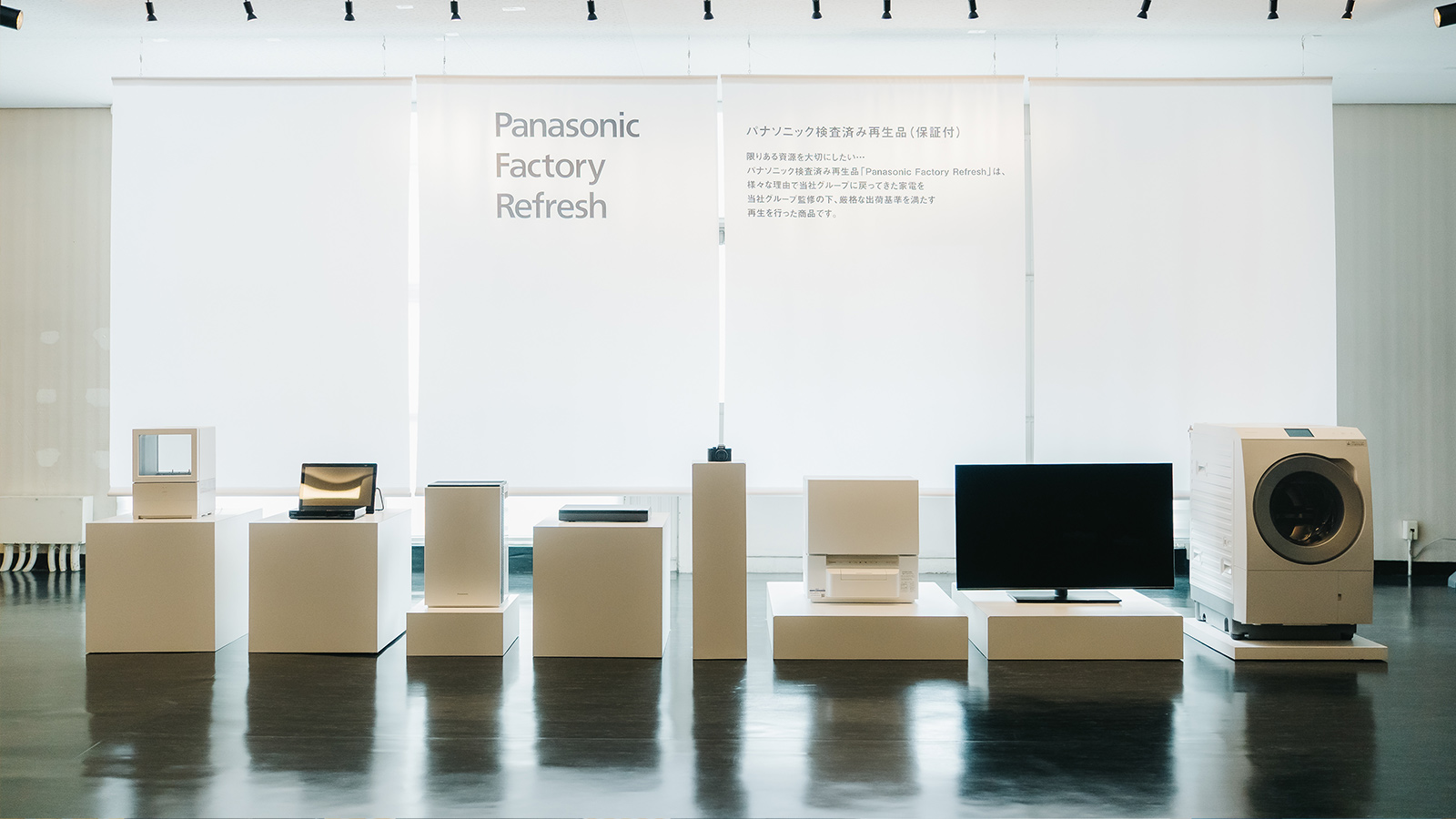
As part of its efforts to realize circular economy-oriented manufacturing, Panasonic launched its “Panasonic Factory Refresh” refurbishing initiative in April 2024, targeting 13 product categories* including washing machines, refrigerators, and televisions.

*The Utsunomiya Factory refurbishes seven categories of appliances. The factory has a total annual refurbishing capacity of 10,000 units. The remaining six product categories are refurbished at Panasonic’s Nara Factory and other factories.

This initiative focuses on repairing and refurbishing appliances that for various reasons have returned to Panasonic, and delivering them to customers as rigorously inspected, warrantied products. Panasonic Entertainment & Communication Co., Ltd.’s Utsunomiya Factory is serving as a central hub for these manufacturing efforts. We spoke with frontline employees who are working hard to establish manufacturing compatible with the circular economy, and learned how the factory was transformed.

An unparalleled public showcase for the refurbishing business

Panasonic’s Utsunomiya Factory, located in Utsunomiya, Tochigi Prefecture, Japan, has long served as a core facility for Panasonic’s consumer electronics business, with a focus on manufacturing and servicing visual, audio, and communication-related equipment. Over the years, it has produced numerous products and accumulated advanced manufacturing expertise. Now that expertise is being applied to a new mainstay business, the refurbishment of returned or used Panasonic products. All refurbished products are inspected, refurbished, and tested to meet the stringent quality standards, with input and guidance from the related manufacturing division. In addition to online sales, refurbished products are available through subscription services. The aim is not only to generate profit from product sales, but to reduce the disposal of unnecessary appliances during residential and office relocation.

One year after the launch of the business, demand is expanding due to such factors as strong quality reviews and affordable pricing.* In May 2025, refurbishing operations were expanded and upgraded, and opened to the public as a showcase for circular economy-oriented manufacturing. Previously scattered refurbishing operations were consolidated into a single location within the factory, with the layout redesigned for category-specific optimization. The spatial design was also significantly revamped, transforming a conventional factory into a new manufacturing environment.

*In a customer satisfaction survey, 94% expressed satisfaction (March 2025, Japan market, Panasonic survey).

The Utsunomiya Factory: Defining Manufacturing Quality

Factory Manager Kyosuke Takeda has been guiding refurbishing operations at the Utsunomiya Factory since their inception.

Kyosuke Takeda, Factory Manager, Utsunomiya Factory, Panasonic Entertainment & Communication Co., Ltd.

Takeda: “Since it opened in 1967, the Utsunomiya Factory’s main role was to serve as a domestic television manufacturing hub contributing to the expansion of Panasonic’s home appliance business,” says Takeda, looking back. “But with production shifting increasingly abroad, television manufacturing ended in 2021. This development prompted us to ask what value we could offer, and we began to consider the best way forward.

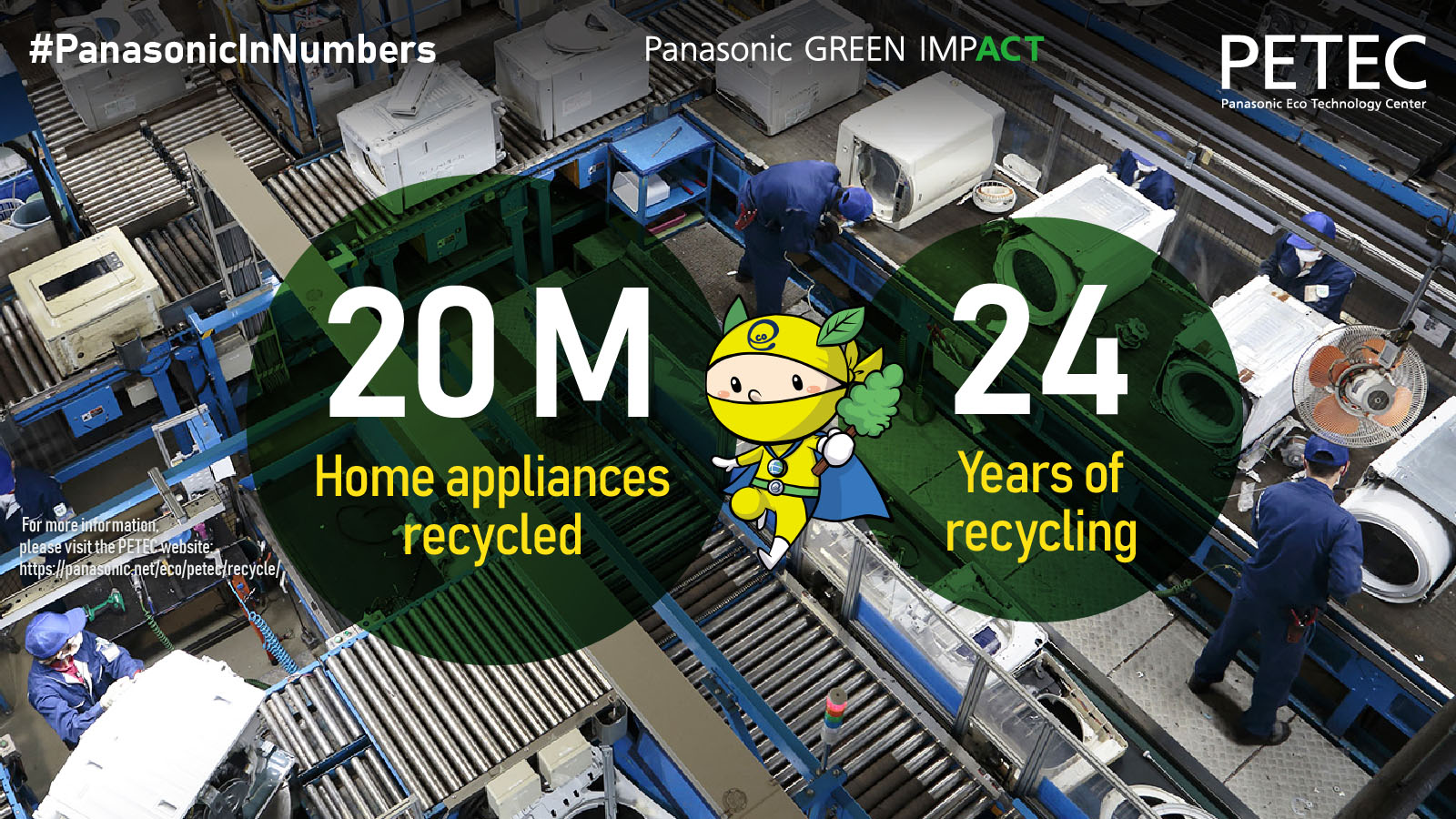
 “Just as we were feeling stymied, we visited Panasonic’s home appliance recycling factory, where we discovered piles of discarded but still-functional products waiting for material recovery or disposal. To discard perfectly usable devices seemed an unconscionable waste. We resolved to change this and launch a refurbishing business to salvage such appliances.

Takeda and his team saw a new role for the Utsunomiya Factory. And without hesitation, they moved to make it reality.

Takeda: “Under Panasonic GREEN IMPACT, the Panasonic Group’s long-term environmental vision, we continually communicated to employees the path we wanted to take. This process gradually transformed individual mindsets, and by instituting a policy of ‘Bringing smiles to customers,’ we proceeded to create unprecedented customer value.

Takeda insists on using rigorous manufacturing standards. He collaborates with factories that manufacture each product to ensure that identical standards are applied in the refurbishing process.

Takeda: “Checking individual parts for harmful substances is one example of how we follow test procedures rigorously. We cut samples from resin and metal components to check for the presence of such substances. To guarantee that cleaning agents and other residues are completely removed during cleaning, every component undergoes the same rigorous inspection it did when new.

“When we refurbish a television, we replace the integrated circuits on the control board individually, as needed. While it’s common practice to swap out the whole board, we have the technology to identify faults among the television’s roughly 1,000 discrete parts, and replace only those that are defective. This advanced technical capability is what sets the Utsunomiya Factory apart.”

Televisions have around 1,000 components, including the integrated circuits on control boards

With global expansion in mind, opening factories and the future of society

Takeda has worked at the Utsunomiya Factory for 12 years. Though manufacturing of OLED TV briefly re-energized factory operations, the business continued to shrink over the long term, and the factory was unable to reverse the downward trend.

Takeda: “The decline in production made for a heavy atmosphere at the factory. The reduction in scale limited investment, which meant we couldn’t tackle new challenges. People started losing their pride in manufacturing. When I took over as Factory manager, the biggest problem was the culture. People felt a sense of crisis, but they couldn’t take concrete action. As soon as I came on board, I spelled the situation out clearly. Without change, the factory would disappear, one hundred percent. Change was our friend, not our enemy, and we had to take action now rather than each team member worrying about whether or not they were up to meeting the challenge. Failure just means ‘try again.’ Once trial and error became the whole objective, the culture started to transform.

“All the ideas for change, like restructuring the refurbishing process or creating relaxation spaces for employees, came from the frontline. Everyone started taking individual initiative and driving change without fearing it. That was a genuine sign that the factory was undergoing transformation.

Panasonic’s refurbishing business has drawn internal and external attention, and employees have recovered their pride in manufacturing. A sense of vitality has returned throughout the factory, and positive cycles are being established, with everyone taking individual initiative to drive frontline reform.

Takeda: “Reducing CO₂ emissions is a pressing global challenge. Consecutive days of extreme summer heat are concrete harbingers of major change in the global environment. We feel the weight of our responsibility to build a future where children can grow up with peace of mind. In this context, Panasonic’s decision to launch its refurbishing business represents a concrete step toward that goal.”

Takeda has put the refurbishing business on the right track. And he’s already raising his sights from Japan to the world.

Takeda: “The Utsunomiya Factory functions only as a hub for our domestic refurbishing business. For example, bringing used appliances back from Asia for refurbishing and resale makes no economic sense when you consider logistics costs and lack of familiarity with use conditions abroad. As such, the future vision of Panasonic’s refurbishing business is to establish a business model servicing individual countries or regions where products circulate. Conforming our approach to individual regions is the key to global business scalability.

“Our scale is still small, and we can’t claim to have acquired a solid competitive advantage yet. But by raising awareness of our refurbishing business, reinforcing our brand image as offering reliable products with long service lives, and providing not just new products, but refurbished products, I’m confident we can establish a solid competitive advantage. To this end, we have opened our refurbishing process to the public.* People’s surprise and approving reactions when they see how we’re bringing products back to life, and the way we’re practicing environmentally conscious manufacturing, is creating new Panasonic fans and ultimately strengthening our competitiveness.

*Tours for the general public are offered weekly from Tuesday through Thursday. For tour information, click here (reservations required). Tours and tour bookings are currently available in Japanese only.


Striving for uniform quality, stressing the environment and economic viability

Katsumi Yamazaki helps Takeda run the manufacturing frontline and manage operations to maintain high productivity and uniform quality.

Katsumi Yamazaki, Manufacturing Supervisor, Utsunomiya Factory, Panasonic Entertainment & Communication Co., Ltd.

Yamazaki:The challenges of climate change and resource depletion are deepening day by day. To address this challenge, we must abandon the ‘use and discard’ model of production and consumption, and build a circular economy-based society. Panasonic is convinced that our refurbishing business has a critical role to play. To realize manufacturing for a circular economy, we’re committed to striking a balance between environmental stewardship and economic viability. We want to stop the needless disposal of even one additional product, and help even one additional customer experience the value of refurbishment.

“We launched the business on a small scale. For example, we adopted reusable packaging that had proven effective in our television operations. We also turned our attention to components that would normally be discarded and pursued possibilities for reuse. A mindset and actions rooted in a deep respect for avoiding waste are what sets us apart.”

The products Yamazaki handles have seen use, and each requires different treatment.

Yamazaki: “Products that come in for refurbishing vary individually in terms of wear and deterioration. This makes it difficult to achieve uniform processing times. As such, we are continuously improving process standardization and optimizing inspection criteria, pursuing high-level production leveling by enhancing our ability to minimize processing time fluctuations. Through continuous honing of the mindset and technical skills required to accurately assess each product’s condition and devise an individualized approach, our overall productivity has improved steadily, and we are beginning to see the results in our metrics.”*

*Products are ranked based on five criteria: External Appearance, Interior Appearance, Number of Hours/times Used, Manufacturing Date, and Odor.

According to Yamazaki, the most satisfying aspect of the refurbishing business is seeing lovingly restored, affordably priced products delighting new owners.

Yamazaki: “Nothing motivates us more than the praise and warm comments we get from customers. It tells us we were right to pursue this business. Another major source of fulfillment is our contribution to the environment. By reducing product waste and using limited resources productively, we’re reducing the burden on the planet. I feel proud to be playing a part in that every day.

We will continue to hone our circular economy-oriented manufacturing, and make Panasonic’s refurbishing business indispensable to society.

Bringing smiles to customers and pride to employees: The Utsunomiya Factory transformed

Following Takeda’s policy of bringing smiles to customers, Maiko Uemura oversaw a revamp of the entire factory.

Maiko Uemura (right), Value Creation Supervisor, Utsunomiya Factory, Panasonic Entertainment & Communication Co., Ltd.

Uemura: “Our extensive spatial redesign had two key aims. One was to create an engaging environment that makes visitors glad they came and turns them into Panasonic fans. It was also aimed at creating an environment where employees could work comfortably and feel proud of their worksite.

We wanted to upend the fixed image that ‘used’ means ‘old and dirty.’ To this end, we installed a wooden tunnel at the factory entrance, constructed from local Kanuma lumber. It creates a warm, refreshing atmosphere for visitors. From the moment they enter the factory, visitors lose any negative image they may have had of used products. In the refurbishing area, we laid out visitor sightlines and movement flows precisely, placing engaging display panels to maximize their functionality and offer a new kind of factory experience. Whenever we hear visitors say that their image of a factory has changed, we’re filled with pride. It makes all of our efforts seem truly worthwhile.”

The entrance tunnel, built from locally-sourced Kanuma cedar lumber

Uemura: “We believe that generating stable revenue through refurbishing while delivering significant value to customers ultimately contributes to a happier future for children. The goal of our work is not just to refurbish used products. Our manufacturing factories are listening earnestly to society and evolving Panasonic’s products and processes through ongoing outreach to customers. This flexible, independent approach is the greatest force for building a sustainable business.

“At the same time, it’s essential that our factories strengthen their communications and engage actively in outreach to the public. Through our factory tours, customers are experiencing advanced Panasonic technological expertise and rigorous quality control, and encountering the founding spirit of Konosuke Matsushita and his philosophy of manufacturing. Both aspects deepen visitor understanding and trust in the Panasonic brand. Looking ahead, we want to promote the concept that choosing refurbished products is cool, and encourage it as a new social value. We are forging a new path with a strong sense of fulfillment and purpose. This is no time for us to stand still.

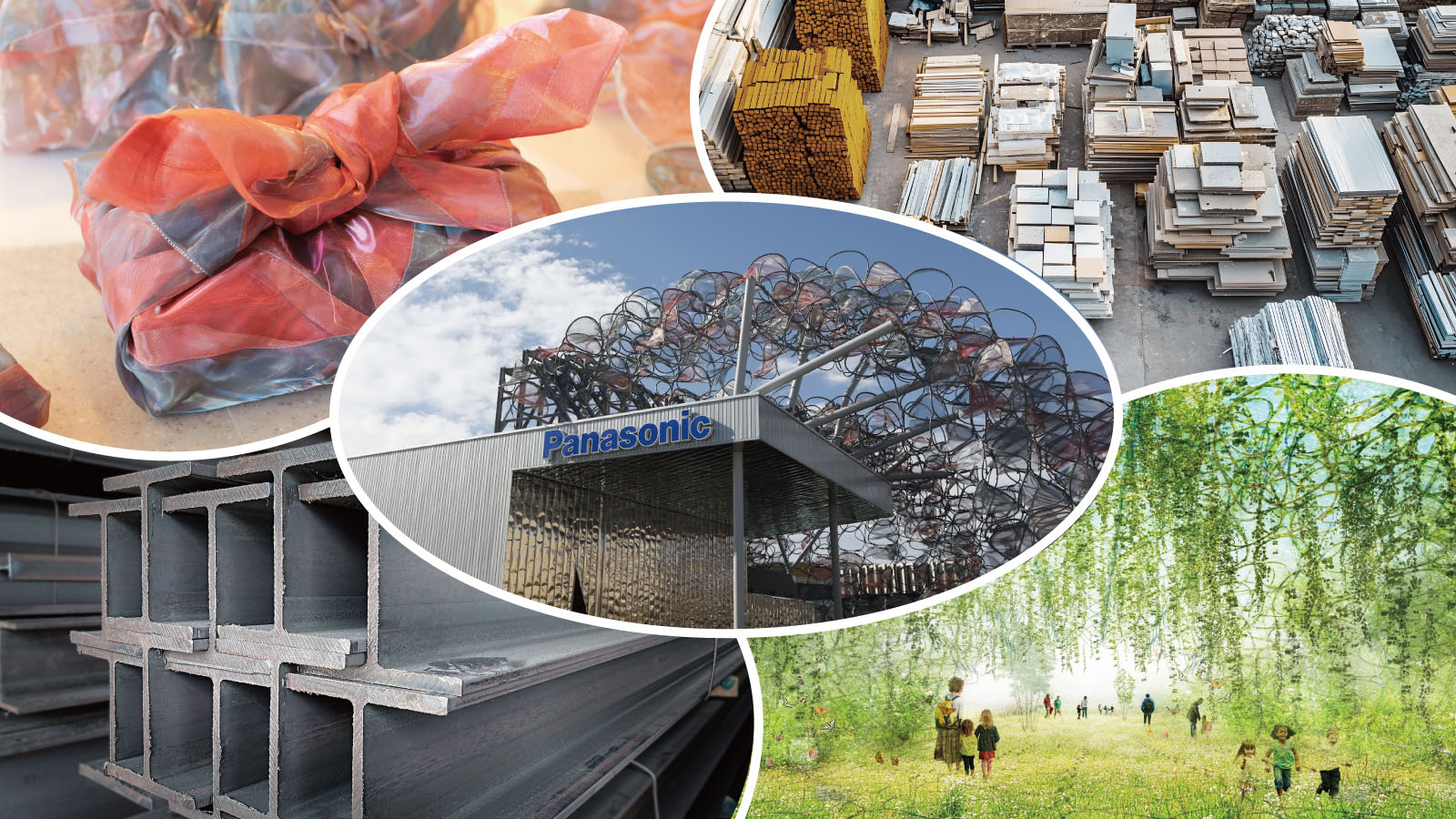
Upcycling repurposes waste materials, such as packaging and optical sheets from appliances, by adding design and other forms of value to transform them into new products

With its proprietary advanced refurbishing technologies, Panasonic is bringing a second life to appliances that were destined for disposal. This is a new form of manufacturing that embodies Konosuke Matsushita’s guiding principle that ‘The Path Has No Limits.’ By enabling customers to enjoy appliances for many more years with peace of mind, we are contributing to better living and a sustainable global environment, with happiness to customers and society alike.

Related Videos

Panasonic Factory Refresh

KWN Kids Report in Panasonic Factory(PEAC Utsunomiya Factory)

Related Articles

The content in this website is accurate at the time of publication but may be subject to change without notice.
Please note therefore that these documents may not always contain the most up-to-date information.
Please note that German, Spanish and Chinese versions are machine translations, so the quality and accuracy may vary.

Panasonic Stories

Recommended articles